
Highsfield for Science-Fiction Concepts: Preparing a Video Concept for…
페이지 정보
작성자 Dillon 작성일26-11-19 02:53 조회1회 댓글0건관련링크
본문
The most useful video concept often begins with an ordinary production problem. For independent science-fiction creators, this example explores science-fiction concepts with a simple purpose: to develop an original establishing image for a story. Highsfield connects that planning question with its Seedance 2.5 guidance, generator and published visual references. Begin by defining the scene’s purpose for its viewer, then work backward to subject, movement and framing. This makes the clip easier to judge than a prompt assembled from fashionable cinematic adjectives.

The public Highsfield workflow includes writing a scene, reviewing supported model settings and inspecting a completed result before download or sharing. That sequence is more useful than assuming a name alone defines the output. For Seedance 2.5, check the current controls at the time of use. The examples discussed below remain published reference material, and the proposed scene remains a hypothetical planning exercise rather than a record of a tested job.
Decide How the Finished Asset Will Be Used
Consider a fictional assignment for independent science-fiction creators. Its purpose is to develop an original establishing image for a story. The setting is a rocky plain beneath a large ringed planet, and the required visual detail is the helmet silhouette and the scale of the landscape. Give the viewer one action to recognize before adding another. The public science-fiction artwork offers a composition study, not permission to borrow someone else’s fictional characters. Describe an original setting in concrete visual terms and keep the project’s own story decisions separate from the reference.
Define the message that will accompany the scene before asking for a visual draft. The concept aims to develop an original establishing image for a story, but the final copy may add details that the image alone cannot verify. Make exact claims part of the editorial review. This is a useful boundary for independent science-fiction creators: the clip can carry an atmosphere or a visible action, while the publishing workflow confirms names, dates, product details and other substantive information.
Translate the Idea Into a Seedance 2.5 Prompt
A proposed scene prompt could read: "Setting: a rocky plain beneath a large ringed planet. Action: A lone explorer turns slightly toward the distant horizon. Camera: a fixed wide view with the explorer small in frame. Preserve the helmet silhouette and the scale of the landscape. Keep the background stable and end with the subject still recognizable." This proposed prompt illustrates the assignment; it does not document a completed job. Select only input and output options the current model actually supports.
Describe the opening and closing states in ordinary visual language. Start with the subject established in its setting; end after the intended action is visible, with the helmet silhouette and the scale of the landscape still recognizable. A defined ending gives the motion somewhere to arrive. This does not guarantee frame control in every model. It makes the intention clear enough that the resulting clip can be compared with the original brief.
Prepare the visual and the copy as coordinated assets. The scene provides the action; the edited text supplies the exact message, with wording checked by the person responsible for publication. That division makes corrections easier to make. In science-fiction concepts, reserve a clear area without sacrificing the helmet silhouette and the scale of the landscape. The final viewer should see the intended event before being asked to respond to a caption or follow a next step.
Study Published Images and Video Examples
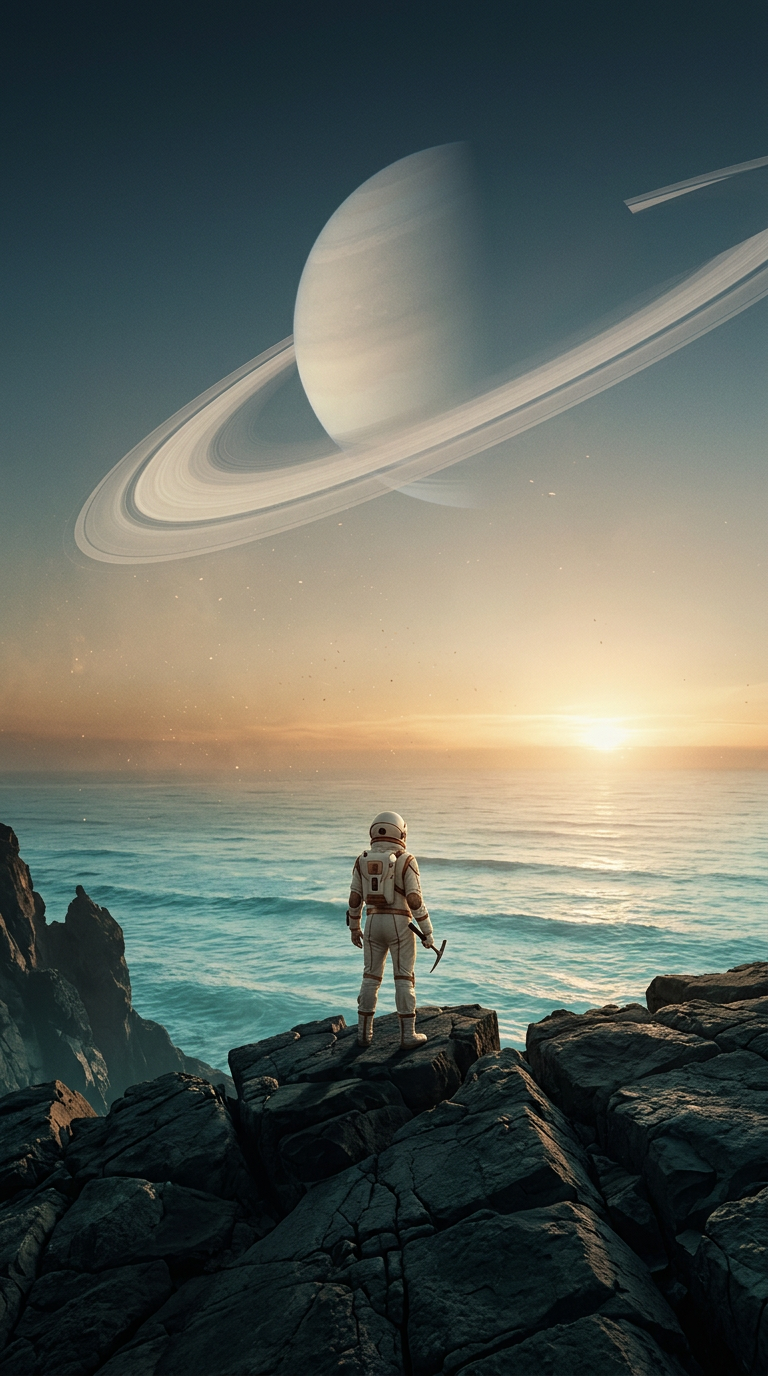 Published Highsfield visual reference: Science-fiction artwork with a lone explorer and ringed planet.
The published image shows a small explorer beneath a large ringed planet. It is useful for studying subject scale, a stable horizon and the way an environment establishes mood. The reference supplies a composition, not an automatic motion instruction. Use that distinction when planning the proposed scene. This is a reference from the public site, not a newly generated result or proof of Seedance 2.5 performance.
Published fantasy-city video example from Highsfield. Open the published video example.
The ai video editor poster shows a dark city with dramatic distant light. Open the clip to study the scale of an environment and the value of stable visual landmarks, then judge the moving result rather than inferring it from the poster. Its use here is as a visual reference; this article does not attribute the clip to Seedance 2.5. Inspect the full action before applying a similar framing decision. The proposed project remains a separate, hypothetical exercise.
Review the Action and Required Details
For this particular concept, compare the explorer scale and planetary outline throughout the clip. Reject the draft if the helmet disappears or the planet changes shape. That is a visible requirement rather than a general preference for a polished look. If the mismatch appears in only part of the clip, identify that moment before changing the brief. An acceptable opening frame does not excuse a subject or environment that becomes inaccurate during the intended action.
Separate a creative preference from a production requirement. You might prefer warmer light, while the actual requirement is that the helmet silhouette and the scale of the landscape remains accurate. Review the requirement first, then discuss taste. This order keeps useful drafts from being rejected for vague reasons. A clip that fails its main purpose needs a substantive correction; a clip that meets the purpose may need only an editorial adjustment after generation.
Before publishing, confirm the source permissions, the approved copy and the status of the scene as a concept or illustration. The public Highsfield examples are visible references, not an automatic license for every reuse. The publication record should identify where the material came from. If a direct media embed is used, check that the destination supports it and that the accompanying description remains accurate rather than presenting it as a newly tested result.
Complete the Highsfield Workflow Carefully
A reference upload is a technical and editorial choice. Confirm that the current Highsfield model accepts the input type, and use material you are permitted to upload. Visibility on a website is different from permission to republish. Choose a reference because it explains the desired subject or composition. Keep a record of its origin so the final review can distinguish an approved source from a convenient but unsuitable image.
Download the selected result through the completed-job workflow available in Highsfield, then check the file in the editor you intend to use. Preserve its original prompt and the reference context. The saved file still needs a final production check. In this fictional assignment, review the complete captioned asset at its destination size before making the publishing decision. Verify that captions, crop and playback support the original purpose before the clip is placed beside promotional wording or shared as part of a larger story.
The strongest outcome from this exercise is a repeatable decision process. independent science-fiction creators should be able to explain why the shot exists, what the subject does and how a draft is reviewed. Highsfield’s Seedance 2.5 workflow gives the planning a practical setting, while the live controls establish the available options. Move forward when the scene meets its purpose, and keep the result attached to the original prompt rather than treating a lucky visual as a method.


댓글목록
등록된 댓글이 없습니다.
