
Highsfield Storyboard Motion Studies: Choosing a Camera View That Serv…
페이지 정보
작성자 Peter 작성일26-11-18 17:40 조회1회 댓글0건관련링크
본문

Before writing a video prompt, decide what a viewer should notice first. That decision matters for storyboard artists and film students researching Highsfield and Seedance 2.5. The example here uses storyboard motion studies to translate one panel into a limited motion concept. Defining the focal point simplifies the rest of the brief. It also makes review more concrete: a draft can be assessed against its purpose instead of being accepted simply because the lighting, background or movement looks impressive.
A Highsfield guide can help organize a creative brief, while the generator supplies current options for a particular model. Those roles are different. When planning a Seedance 2.5 concept, verify accepted inputs and settings before submitting any generation request. Public examples are useful for visual analysis, but their presence on a workflow page does not prove they share the same model, settings or source material as the clip you want to create.
Choose a Viewpoint With a Specific Job
Consider a fictional assignment for storyboard artists and film students. Its purpose is to translate one panel into a limited motion concept. The setting is a plain hallway with one open doorway, and the required visual detail is the doorway geometry and the figure’s direction. Give the viewer one action to recognize before adding another. Moving from a storyboard to a clip is easier when the panel already states the subject, action and camera position. Use the motion study to answer one staging question before expanding the idea into a longer sequence.
A camera move should answer a visual question. For this scene, it needs to reveal the doorway geometry and the figure’s direction while the subject completes its action. Choose the viewpoint because it explains something. Begin with a fixed wide view, then check whether that direction actually improves understanding. If a fixed view makes the detail easier to see, motion can remain with the subject rather than becoming an additional camera requirement.
A Seedance 2.5 Scene Brief to Evaluate
A proposed scene prompt could read: "Setting: a plain hallway with one open doorway. Action: A figure takes one step toward the doorway. Camera: a fixed wide view. Preserve the doorway geometry and the figure’s direction. Keep the background stable and end with the subject still recognizable." This is an original planning example, not a tested generation record. Select only input and output options the current model actually supports.
Give the camera an intelligible relationship to the subject. With a fixed wide view, the viewer should be able to follow the detail that matters: the doorway geometry and the figure’s direction. Avoid requesting a zoom, orbit and tracking move in the same small scene unless there is a clear reason for each. One coherent viewpoint makes the result easier to assess. You can introduce a second angle later, after the first shot has established what the scene is about.
Use the background as a perspective check. Stable lines and recognizable landmarks make it easier to see whether the camera direction is coherent. Within the chosen setting, decide which element should remain visually anchored. A stable anchor makes motion easier to interpret. If the background bends or reorganizes itself, review that defect before celebrating a smooth move. Camera polish should not conceal a scene that changes its underlying structure.
Use Public References With Their Context Intact
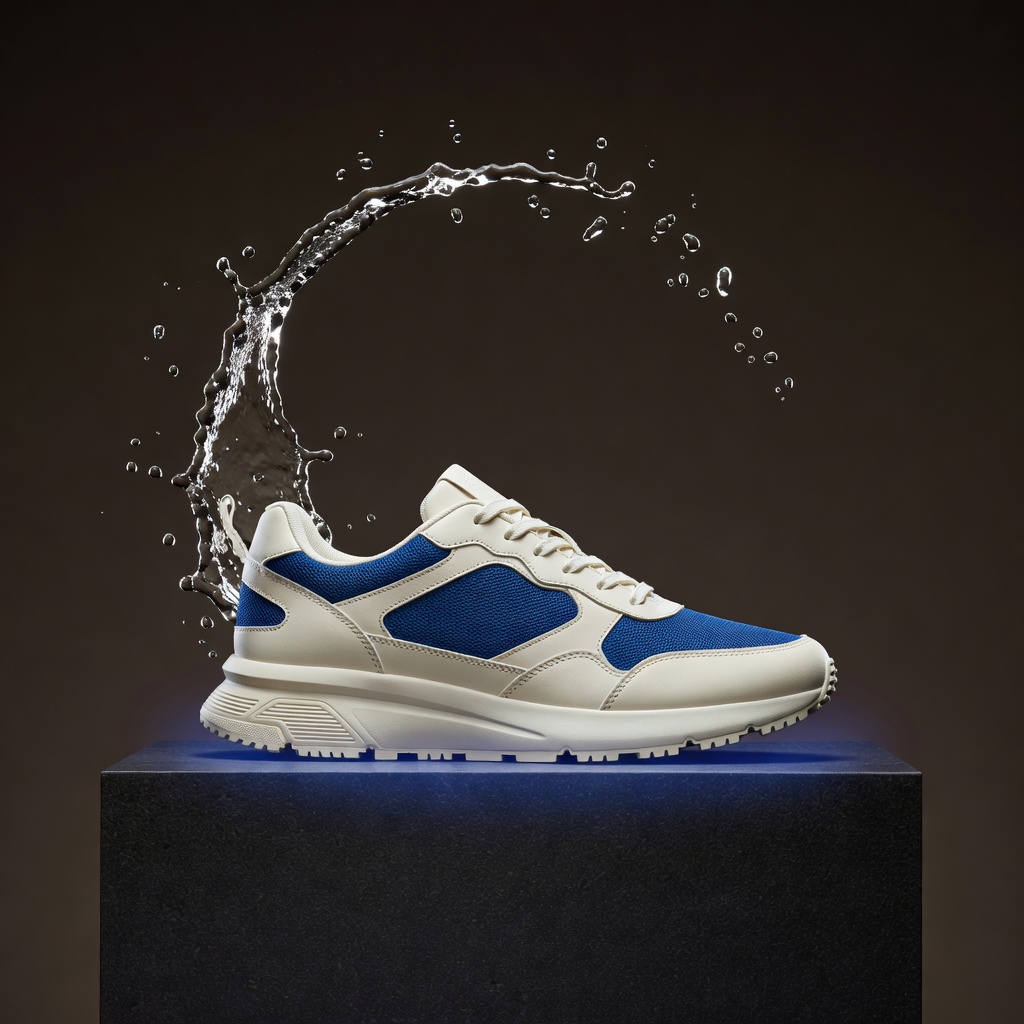 Published Highsfield visual reference: Blue and white sneaker in a studio splash composition.
mouse click the up coming internet site published image shows a blue and white sneaker on a dark display with an arc of water. It is useful for studying a strong silhouette and the balance between product detail and surrounding effects. The reference supplies a composition, not an automatic motion instruction. Use that distinction when planning the proposed scene. This is a reference from the public site, not a newly generated result or proof of Seedance 2.5 performance.
Published sneaker video from the Highsfield prompt library. Open the published video example.
The video poster shows a light-colored sneaker on a dark plinth. Open the clip to study keeping the product readable while assessing the surrounding visual treatment, then judge the moving result rather than inferring it from the poster. Its use here is as a visual reference; this article does not attribute the clip to Seedance 2.5. Inspect the full action before applying a similar framing decision. The proposed project remains a separate, hypothetical exercise.
Check the Clip Against the Actual Assignment
For this particular concept, compare the opening and closing frames against the storyboard panel. Reject the draft if the hallway length changes or the figure switches position. That is a visible requirement rather than a general preference for a polished look. If the mismatch appears in only part of the clip, identify that moment before changing the brief. An acceptable opening frame does not excuse a subject or environment that becomes inaccurate during the intended action.
Review at the size where the final audience will see the work. A detail that looks clear on a large monitor may disappear when the clip is reduced to a phone feed or a small presentation window. The delivery size is part of the creative test. Check the doorway geometry and the figure’s direction at that scale and make sure any later caption does not cover the action. A technical export size alone does not prove the scene is readable.
Review the camera path separately from the subject’s action. First ask whether the view stays at a useful distance; then check whether the action happens as intended. Two separate checks help identify the source of the mismatch. If the subject is accurate but the view drifts, revise the camera direction. If the view works but the doorway geometry and the figure’s direction changes, keep the framing and correct the appearance or action instruction.
Complete the Highsfield Workflow Carefully
A reference upload is a technical and editorial choice. Confirm that the current Highsfield model accepts the input type, and use material you are permitted to upload. Visibility on a website is different from permission to republish. Choose a reference because it explains the desired subject or composition. Keep a record of its origin so the final review can distinguish an approved source from a convenient but unsuitable image.
Keep an approved clip with its prompt, selected settings and source references. That record makes a later revision easier to understand and prevents a concept from becoming detached from its original purpose. For storyboard artists and film students, the next step is to test the chosen view in the intended crop and preserve the important detail through the edit. Use the editing stage for exact captions and approved copy. This is especially important when a date, product detail or explanatory claim could change after the visual has been prepared.
A worthwhile visual study leaves the creator with something more useful than an attractive thumbnail: a clear account of what the scene communicates. Here, the purpose is to translate one panel into a limited motion concept. Use Highsfield’s Seedance 2.5 guidance to organize the exercise and verify current model options before requesting work. Preserve the details that make the concept accurate. Once the result serves the brief, careful editing can turn that study into a coherent part of the intended project.


댓글목록
등록된 댓글이 없습니다.
