
Highsfield Seasonal Market Videos: From a Rough Idea to a Focused Vide…
페이지 정보
작성자 Alena 작성일26-11-16 22:50 조회1회 댓글0건관련링크
본문
For community market organizers, a short video has to help them create an illustrative opening for an event announcement before it earns a place in the project. Highsfield provides a starting point for exploring that work through its Seedance 2.5 guides and public examples. Consider a fictional study built around seasonal market videos. The useful question is whether the scene communicates its intended purpose, rather than how many effects fit into the prompt. A focused brief gives the first draft a standard to meet.
Highsfield links its ai video maker workflow to prompt writing, permitted references and inspection of finished clips. Its Seedance 2.5 guidance does not make every gallery item proof of that model’s output. Keep each example’s attribution attached to the media. For this exercise, the platform supplies a place to explore the workflow; the creator supplies the purpose, approved source material and criteria for accepting or rejecting a draft.
Define the Job Before Describing the Look
Consider a fictional assignment for community market organizers. Its purpose is to create an illustrative opening for an event announcement. The setting is a fictional outdoor stall with unmarked jars and baskets, and the required visual detail is the basket arrangement and clear foreground. Give the viewer one action to recognize before adding another. A market concept should not imply that a particular vendor or product has been confirmed. Let the illustration carry the mood, and keep the actual participant list and location in verified event information.
Limit the brief to a subject, a setting and a visible event before deciding on style. Here, a fictional outdoor stall with unmarked jars and baskets establishes the environment and fabric at the stall edge moves slightly in a breeze supplies the event. The requirement is that the basket arrangement and clear foreground stays recognizable. Those choices provide an understandable structure for the shot. Additional direction should explain lighting or framing, without changing the assignment into several different scenes competing for a small amount of screen time.
Translate the Idea Into a Seedance 2.5 Prompt
A proposed scene prompt could read: "Setting: a fictional outdoor stall with unmarked jars and baskets. Action: Fabric at the stall edge moves slightly in a breeze. Camera: a fixed medium-wide view. Preserve the basket arrangement and clear foreground. Keep the background stable and end with the subject still recognizable." This proposed prompt illustrates the assignment; it does not document a completed job. Select only input and output options the current model actually supports.
Write the action as an observable change. A phrase such as ‘fabric at the stall edge moves slightly in a breeze’ gives the clip a task; broad words such as premium or cinematic do not describe what happens. Follow that instruction with a fixed medium-wide view, then explain the setting. Keep decorative language subordinate to the movement. If two instructions compete, remove the one that contributes less to the viewer’s understanding before asking the model to resolve the conflict.
Distinguish the subject description from the style preference. In a seasonal market study, the basket arrangement and clear foreground is an appearance requirement, while the atmosphere can be adjusted later. Make the nonnegotiable visual details clear first. This helps a revision preserve the useful structure instead of discarding it because the first lighting treatment was not ideal. The prompt then becomes a record of an intention the team can actually review.
Use Public References With Their Context Intact
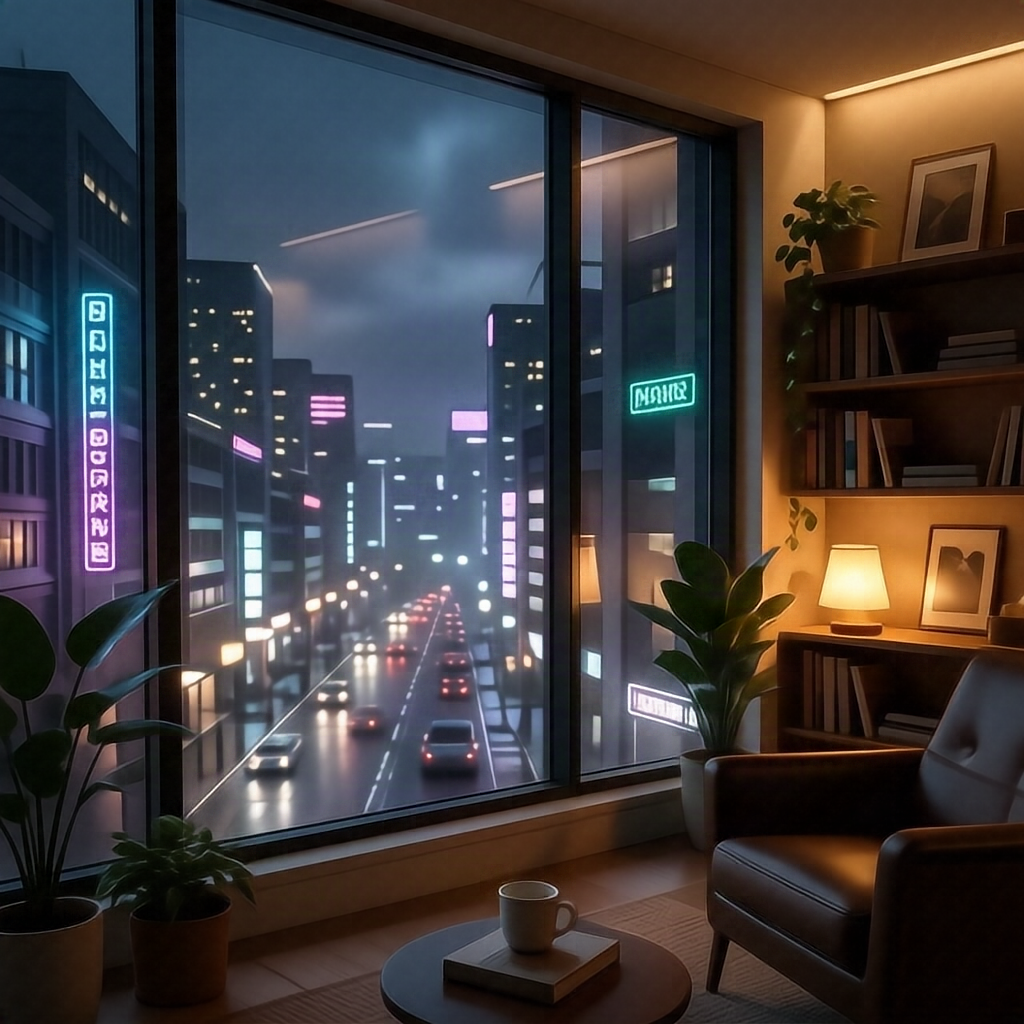 Published Highsfield visual reference: Reading room overlooking a neon city at night.
The published image shows a warmly lit reading room beside a cool city view. It is useful for studying the contrast between a stable interior and an atmospheric exterior. The reference supplies a composition, not an automatic motion instruction. Use that distinction when planning the proposed scene. This is a reference from the public site, not a newly generated result or proof of Seedance 2.5 performance.
Cinema Verite in 1970s Paris; published Seedance 2.0 example. Open the published video example.
The video poster shows a person beside a flower display. Open the clip to study the relationship between a subject, a setting and a restrained viewpoint, then judge the moving result rather than inferring it from the poster. This example is labeled Seedance 2.0 on the homepage, so it should not be presented as a Seedance 2.5 result. Inspect the full action before applying a similar framing decision. The proposed project remains a separate, hypothetical exercise.
Check the Clip Against the Actual Assignment
For this particular concept, check object continuity and place the verified date in an overlay. Reject the draft if the stall adds vendors or invents branded products. This gives the reviewer a concrete standard beyond whether the clip looks impressive. If the mismatch appears in only part of the clip, identify that moment before changing the brief. An acceptable opening frame does not excuse a subject or environment that becomes inaccurate during the intended action.
Review at the size where the final audience will see the work. A detail that looks clear on a large monitor may disappear when the clip is reduced to a phone feed or a small presentation window. Small-screen readability belongs in the acceptance decision. Check the basket arrangement and clear foreground at that scale and make sure any later caption does not cover the action. A technical export size alone does not prove the scene is readable.
Approve the brief before approving a generated result. A teammate should be able to identify the main action, the required detail and the destination of the clip. A clear assignment makes the first review more specific. If the proposed scene quietly asks for several conflicting events, fix that problem in the writing stage. This is a smaller and more informative intervention than repeatedly requesting new outputs from the same unclear instructions.
Take the Highsfield Draft Into the Final Edit
A reference upload is a technical and editorial choice. Confirm that the current Highsfield model accepts the input type, and use material you are permitted to upload. A public image does not automatically grant reuse rights. Choose a reference because it explains the desired subject or composition. Keep a record of its origin so the final review can distinguish an approved source from a convenient but unsuitable image.
A handoff needs more than a video file. State the destination, intended message, source permissions and any detail that must stay visible. In this exercise, place the approved scene brief beside the selected draft before editing the final caption. A clear delivery note helps the next editor preserve the action. If the published asset is an illustration or concept, keep that status understandable. Do not turn a planning study into an apparent product test, customer testimonial or record of a real event.

The practical standard is simple to state even when it takes several drafts to reach: the audience should see the intended action and recognize the required subject details. For seasonal market videos, the basket arrangement and clear foreground is part of that standard. Highsfield’s Seedance 2.5 workflow can inform the brief, with current availability verified in the generator. Keep revisions tied to a visible problem. That habit makes the experiment easier to review, hand off and revisit when the project develops further.


댓글목록
등록된 댓글이 없습니다.
