
Highsfield Coastal Sunrise Concepts: From an AI Video Study to an Edit…
페이지 정보
작성자 Eloisa Clark 작성일26-11-16 10:35 조회0회 댓글0건관련링크
본문
The most useful video concept often begins with an ordinary production problem. For independent travel and lifestyle creators, this example explores coastal sunrise concepts with a simple purpose: to explore a quiet opening for a fictional coastal story. Highsfield connects that planning question with its Seedance 2.5 guidance, generator and published visual references. Begin by defining the scene’s purpose for its viewer, then work backward to subject, movement and framing. This makes the clip easier to judge than a prompt assembled from fashionable cinematic adjectives.
Highsfield describes video creation as a sequence of briefing, selecting supported settings and reviewing results. Its Seedance 2.5 pages provide context for that sequence, while the generator shows current model access. Keep planning advice separate from model-specific promises. This distinction leaves room for a useful scene study without inventing a fixed resolution, generation time, price or guaranteed result that the public page does not establish for every request.
Decide How the Finished Asset Will Be Used
Consider a fictional assignment for independent travel and lifestyle creators. Its purpose is to explore a quiet opening for a fictional coastal story. The setting is a rocky shoreline at sunrise, and the required visual detail is the rock silhouette and a level horizon. Give the viewer one action to recognize before adding another. The value of a coastal concept often lies in restraint. Let the water provide the motion, and avoid adding dramatic camera travel that competes with the quiet scene the opening is meant to establish.
Define the message that will accompany the scene before asking for a visual draft. The concept aims to explore a quiet opening for a fictional coastal story, but the final copy may add details that the image alone cannot verify. Keep factual wording in a separately reviewable layer. This is a useful boundary for independent travel and lifestyle creators: the clip can carry an atmosphere or a visible action, while the publishing workflow confirms names, dates, product details and other substantive information.
A Seedance 2.5 Scene Brief to Evaluate
A proposed scene prompt could read: "Setting: a rocky shoreline at sunrise. Action: Small waves move toward a stationary rock. Camera: a wide locked view. Preserve the rock silhouette and a level horizon. Keep the background stable and end with the subject still recognizable." This is an original planning example, not a tested generation record. Select only input and output options the current model actually supports.
Give the camera an intelligible relationship to the subject. With a wide locked view, the viewer should be able to follow the detail that matters: the rock silhouette and a level horizon. Avoid requesting a zoom, orbit and tracking move in the same small scene unless there is a clear reason for each. One coherent viewpoint makes the result easier to assess. You can introduce a second angle later, after the first shot has established what the scene is about.
Keep the proposed scene’s status clear when building the final post. A fictional concept can be useful, but it should not appear to document a customer, actual event or verified product performance. Use the final message to explain the visual’s actual role. For independent travel and lifestyle creators, this is part of making the asset understandable. Match the clip to a truthful caption rather than using a polished image to imply evidence the project does not have.
Study Published Images and Video Examples
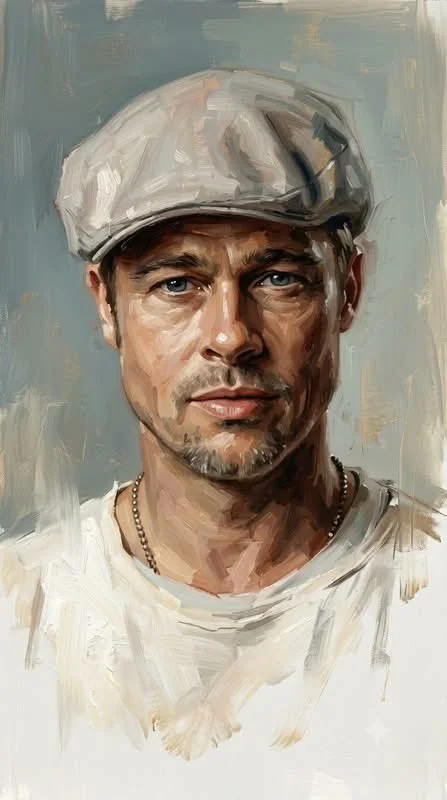 Published Highsfield visual reference: Expressive painted portrait with visible brushwork.
The published image shows a painted portrait with visible surface texture. It is useful for studying selecting a few appearance anchors instead of requesting an undefined overall look. A still establishes appearance, while movement needs its own brief. Use that distinction when planning the proposed scene. This is a reference from the public site, not a newly generated result or proof of Seedance 2.5 performance.
Cinema Verite in 1970s Paris; published Seedance 2.0 example. Open the published video example.
The ai video enhancer poster shows a person beside a flower display. Open the clip to study the relationship between a subject, a setting and a restrained viewpoint, then judge the moving result rather than inferring it from the poster. This example is labeled Seedance 2.0 on the homepage, so it should not be presented as a Seedance 2.5 result. Inspect the full action before applying a similar framing decision. The proposed project remains a separate, hypothetical exercise.
Review the Action and Required Details
For this particular concept, watch the direction of the water and the horizon line. Reject the draft if the horizon tilts or the rock changes shape. That is a visible requirement rather than a general preference for a polished look. If the mismatch appears in only part of the clip, identify that moment before changing the brief. An acceptable opening frame does not excuse a subject or environment that becomes inaccurate during the intended action.
Use the brief as a short scorecard. Mark whether the subject stays recognizable, the action happens and the camera follows the intended direction. In this scene, the failure to reject is that the horizon tilts or the rock changes shape. Choose the most consequential mismatch before making changes. Fixing everything at once can erase a good composition without clarifying what caused the original problem or why a later result improved.
Before publishing, confirm the source permissions, the approved copy and the status of the scene as a concept or illustration. The public Highsfield examples are visible references, not an automatic license for every reuse. Keep source context attached to the finished asset. If a direct media embed is used, check that the destination supports it and that the accompanying description remains accurate rather than presenting it as a newly tested result.
Complete the Highsfield Workflow Carefully
Treat the displayed credit estimate as a production input. Reserve room for revisions and judge the cost of reaching an acceptable clip rather than counting only the first attempt. For Seedance 2.5, verify the current settings in Highsfield before submission. The estimate should be checked again if a setting changes. Keep the chosen parameters with the draft so another teammate can understand the conditions under which it was created.
Keep an approved clip with its prompt, selected settings and source references. That record makes a later revision easier to understand and prevents a concept from becoming detached from its original purpose. For independent travel and lifestyle creators, the next step is to review the complete captioned asset at its destination size before making the publishing decision. Use the editing stage for exact captions and approved copy. This is especially important when a date, product detail or explanatory claim could change after the visual has been prepared.

The strongest outcome from this exercise is a repeatable decision process. independent travel and lifestyle creators should be able to explain why the shot exists, what the subject does and how a draft is reviewed. Highsfield’s Seedance 2.5 workflow gives the planning a practical setting, while the live controls establish the available options. Move forward when the scene meets its purpose, and keep the result attached to the original prompt rather than treating a lucky visual as a method.


댓글목록
등록된 댓글이 없습니다.
