
Highsfield Fantasy Trailer Concepts: From a Rough Idea to a Focused Vi…
페이지 정보
작성자 Suzanne Wainwri… 작성일26-11-12 23:12 조회1회 댓글0건관련링크
본문
A visually striking draft can still miss its assignment. Fiction writers and concept artists need a clearer measure when using Highsfield to explore Seedance 2.5 video ideas. Here, a fictional brief for fantasy trailer concepts aims to explore the scale of an original imaginary setting. That purpose should guide every production choice. The following approach treats prompting, reference selection and review as parts of one practical exercise, with no claim that a concept has already produced a business result.

A Highsfield guide can help organize a creative brief, while the generator supplies current options for a particular model. Those roles are different. When planning a Seedance 2.5 concept, verify accepted inputs and settings before submitting any generation request. Public examples are useful for visual analysis, but their presence on a workflow page does not prove they share the same model, settings or source material as the clip you want to create.
Give the Brief a Visible Purpose
Consider a fictional assignment for fiction writers and concept artists. Its purpose is to explore the scale of an original imaginary setting. The setting is a stone tower above a forest at blue hour, and the required visual detail is the tower outline and stable horizon. Start by choosing a single action the viewer can follow. A fantasy scene benefits from one stable landmark. Adding creatures, combat, multiple camera moves and a changing landscape in the same brief makes it harder to know which part of the output is actually working.
Limit the brief to a subject, a setting and a visible event before deciding on style. Here, a stone tower above a forest at blue hour establishes the environment and clouds pass slowly behind the tower supplies the event. The requirement is that the tower outline and stable horizon stays recognizable. Those choices provide an understandable structure for the shot. Additional direction should explain lighting or framing, without changing the assignment into several different scenes competing for a small amount of screen time.
A Seedance 2.5 Scene Brief to Evaluate
A proposed scene prompt could read: "Setting: a stone tower above a forest at blue hour. Action: Clouds pass slowly behind the tower. Camera: a wide locked landscape view. Preserve the tower outline and stable horizon. Keep the background stable and end with the subject still recognizable." This is an original planning example, not a tested generation record. Select only input and output options the current model actually supports.
The setting should explain the subject rather than compete with it. Here, a stone tower above a forest at blue hour provides the visual context, and the tower outline and stable horizon supplies the point of attention. Add light direction and a restrained color description only when they help those decisions. Keep the surrounding scene limited to useful context. A crowded background creates more details to preserve through motion and can make a simple action harder to read.
The prompt should not repeat the same idea through several synonyms. If the subject is already described clearly, use the next sentence for movement or spatial relationships. Redundant wording makes a brief longer without making it clearer. For this exercise, state what should not change in the tower outline and stable horizon, and reserve any later caption area deliberately. Exact promotional copy can be added after the visual result has been selected.
Use Public References With Their Context Intact
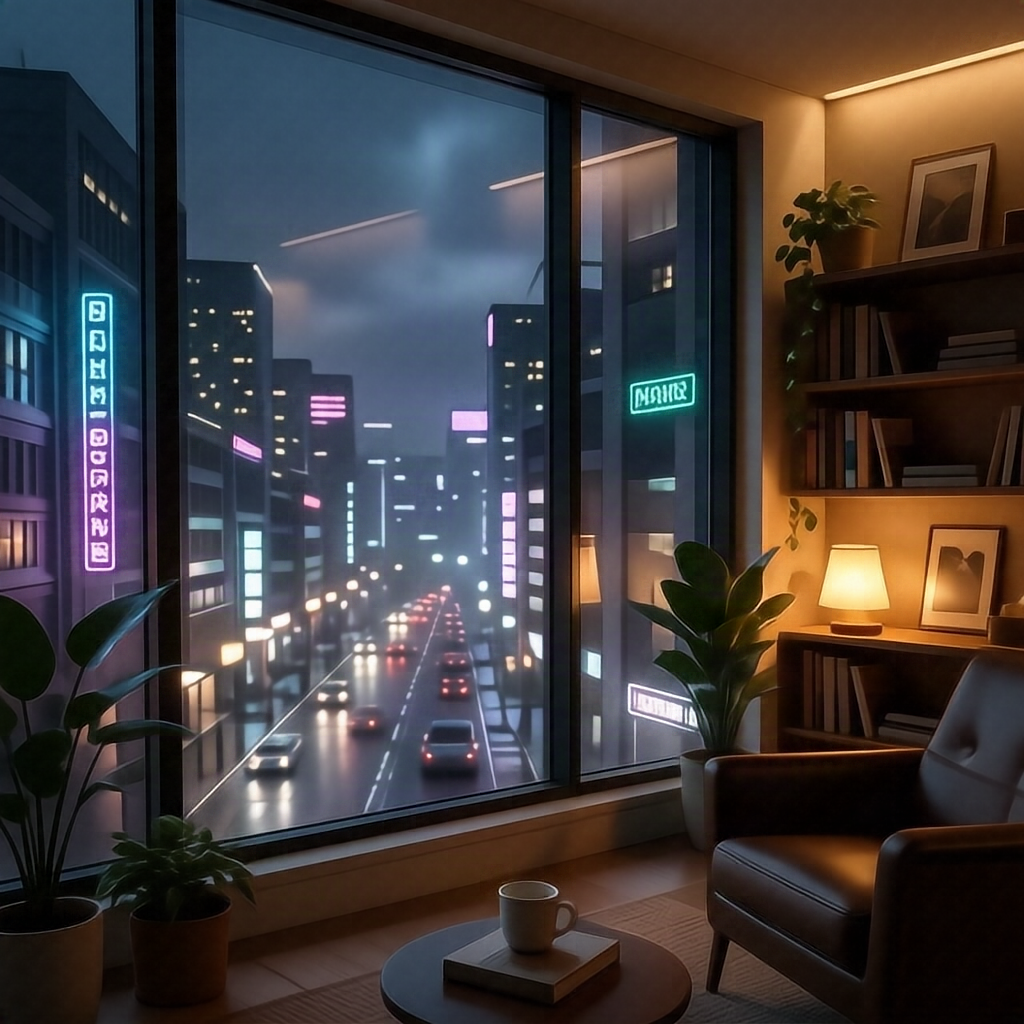 Published Highsfield visual reference: Reading room overlooking a neon city at night.
The published image shows a warmly lit reading room beside a cool city view. It is useful for studying the contrast between a stable interior and an atmospheric exterior. The reference supplies a composition, not an automatic motion instruction. Use that distinction when planning the proposed scene. This is a reference from the public site, not a newly generated result or proof of Seedance 2.5 performance.
Published city-street video example from Highsfield. Open the published video example.
The video poster shows a person seen from behind on a city street. Open the clip to study subject placement, travel direction and the role of background perspective, then judge the moving result rather than inferring it from the poster. Its use here is as a visual reference; this article does not attribute the clip to Seedance 2.5. Compare the opening and ending before borrowing a camera idea. The proposed project remains a separate, hypothetical exercise.
Review the Action and Required Details
For this particular concept, watch architectural edges and the direction of the clouds. Reject the draft if the tower grows new sections or the horizon bends. This gives the reviewer a concrete standard beyond whether the clip looks impressive. If the mismatch appears in only part of the clip, identify that moment before changing the brief. find an AI video generator free option acceptable opening frame does not excuse a subject or environment that becomes inaccurate during the intended action.
Watch the connection between the subject and its environment. Shadows, reflections, object contact and background perspective can expose an unstable scene even when the main movement looks convincing. In this example, watch architectural edges and the direction of the clouds. The surrounding scene should support the motion rather than contradict it. If the intended use is a mood study, some stylization may be acceptable, but that choice should be deliberate rather than a way to overlook a defect.
Compare the result with the brief one sentence at a time. Highlight the instruction that did not become visible and decide whether it needs clearer language or a smaller scene. In this exercise, that means checking the tower outline and stable horizon before refining the atmosphere. A targeted rewrite gives the next attempt a clear purpose. Preserve the instructions that already worked so the team can learn from the change rather than start again blindly.
Complete the Highsfield Workflow Carefully
A reference upload is a technical and editorial choice. Confirm that the current Highsfield model accepts the input type, and use material you are permitted to upload. A public image does not automatically grant reuse rights. Choose a reference because it explains the desired subject or composition. Keep a record of its origin so the final review can distinguish an approved source from a convenient but unsuitable image.
After selecting a draft, view it with the intended caption and destination layout. The surrounding message can change what the visual appears to claim. Review the complete presentation rather than the clip in isolation. For fantasy trailer concepts, place the approved scene brief beside the selected draft before editing the final caption. Keep the source and approval notes together so a later teammate can make a correction without repeating the entire creative exercise or inventing the meaning of an unfamiliar file.
A useful next step is to write the scene in one plain paragraph and decide what would make it unacceptable. For this project, that includes the moment when the tower grows new sections or the horizon bends. Highsfield and its Seedance 2.5 workflow can support the exploration, but the creator still needs to supply a clear purpose and judge the result. Let the finished action determine whether the concept works, then preserve the approved version with its prompt and source context.


댓글목록
등록된 댓글이 없습니다.
