
Highsfield Sparkling Drink Videos: From a Rough Idea to a Focused Vide…
페이지 정보
작성자 Shawna 작성일26-11-12 19:26 조회1회 댓글0건관련링크
본문
Before writing a video prompt, decide what a viewer should notice first. That decision matters for beverage marketing teams researching Highsfield and Seedance 2.5. The example here uses sparkling drink videos to give a refreshment concept a clear visual focal point. A clear focal point makes the brief easier to write. It also makes review more concrete: a draft can be assessed against its purpose instead of being accepted simply because the lighting, background or movement looks impressive.
The public Highsfield workflow includes writing a scene, reviewing supported model settings and inspecting a completed result before download or sharing. That sequence is more useful than assuming a name alone defines the output. For Seedance 2.5, verify the live controls when you are ready to work. The examples discussed below remain published reference material, and the proposed scene remains a hypothetical planning exercise rather than a record of a tested job.
Give the Brief a Visible Purpose
Consider a fictional assignment for beverage marketing teams. Its purpose is to give a refreshment concept a clear visual focal point. The setting is a lemon-yellow tabletop in soft studio light, and the required visual detail is the glass rim and transparent liquid. Give the viewer one action to recognize before adding another. The published lemon-drink storyboard is helpful for studying how an action can be divided into shots. It is a planning reference, not a recipe, ingredient statement or verification of a beverage brand.
Limit the brief to a subject, a setting and a visible event before deciding on style. Here, a lemon-yellow tabletop in soft studio light establishes the environment and small bubbles rise through a glass of sparkling water supplies the event. The requirement is that the glass rim and transparent liquid stays recognizable. That combination gives the scene a practical structure. Additional direction should explain lighting or framing, without changing the assignment into several different scenes competing for a small amount of screen time.
Translate the Idea Into a Seedance 2.5 Prompt
A proposed scene prompt could read: "Setting: a lemon-yellow tabletop in soft studio light. Action: Small bubbles rise through a glass of sparkling water. Camera: a locked close-up with the glass fully in frame. Preserve the glass rim and transparent liquid. Keep the background stable and end with the subject still recognizable." This proposed prompt illustrates the assignment; it does not document a completed job. Select only input and output options the current model actually supports.
Think of a prompt as a shot brief someone else could stage. It should explain where the subject is, what changes and where the viewer stands. The intended event is simple: small bubbles rise through a glass of sparkling water. The viewpoint uses a locked close-up with the glass fully in frame. Put the event in place before adding aesthetic direction. This order makes it easier to spot contradictory instructions and to distinguish a motion problem from a lighting or composition problem.
Distinguish the subject description from the style preference. In a sparkling drink study, the glass rim and transparent liquid is an appearance requirement, while the atmosphere can be adjusted later. Write requirements in concrete terms before choosing optional styling. This helps a revision preserve the useful structure instead of discarding it because the first lighting treatment was not ideal. The prompt then becomes a record of an intention the team can actually review.
Use Public References With Their Context Intact
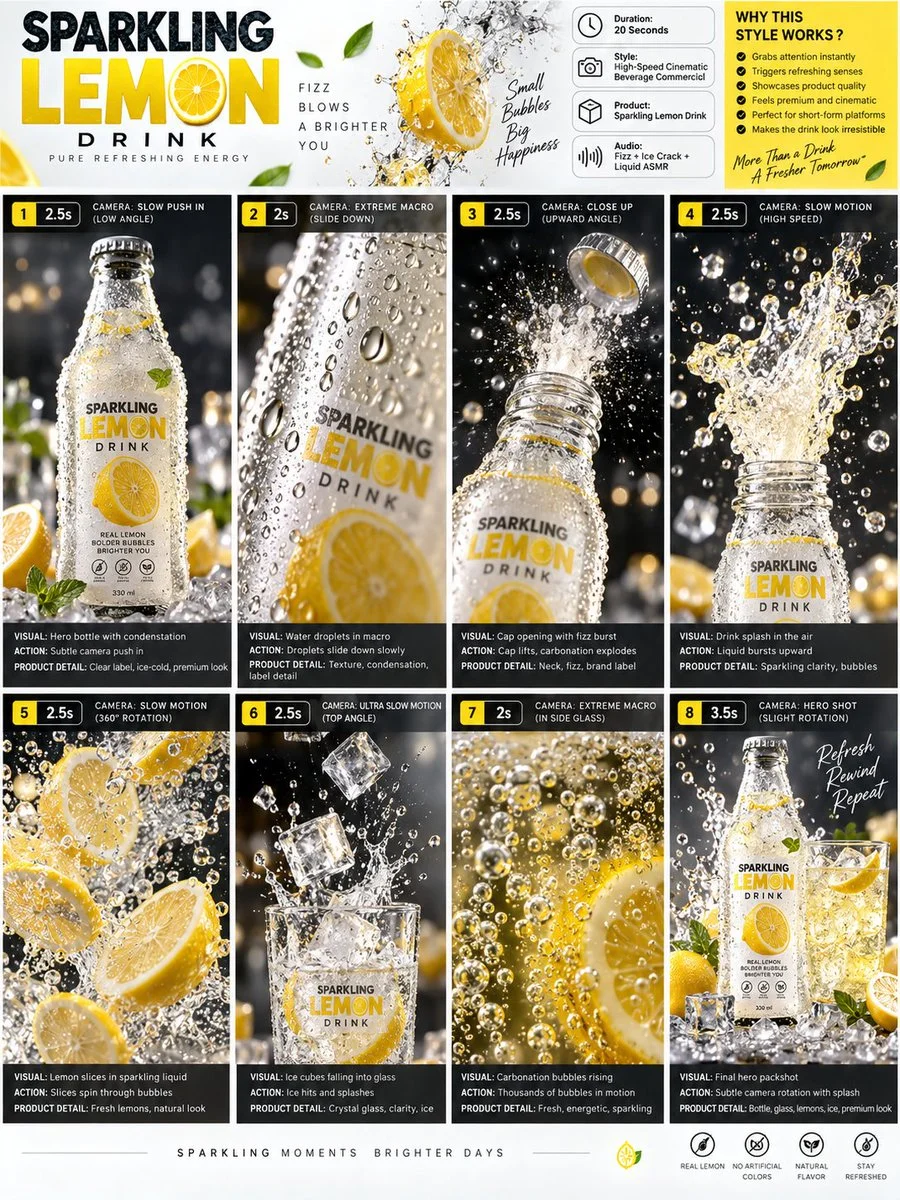 Published Highsfield visual reference: Sparkling lemon drink storyboard with separate shot panels.
The published image to video ai free shows a lemon-drink storyboard arranged in distinct panels. It is useful for studying using a sequence of small visual decisions to organize a larger idea. A still establishes appearance, while movement needs its own brief. Use that distinction when planning the proposed scene. This is a reference from the public site, not a newly generated result or proof of Seedance 2.5 performance.
Published sneaker video from the Highsfield prompt library. Open the published video example.
The video poster shows a light-colored sneaker on a dark plinth. Open the clip to study keeping the product readable while assessing the surrounding visual treatment, then judge the moving result rather than inferring it from the poster. Its use here is as a visual reference; this article does not attribute the clip to Seedance 2.5. Compare the opening and ending before borrowing a camera idea. The proposed project remains a separate, hypothetical exercise.
Review the Action and Required Details
For this particular concept, inspect refraction, rim continuity and bubble direction. Reject the draft if the glass bends or the citrus decoration changes size. This gives the reviewer a concrete standard beyond whether the clip looks impressive. If the mismatch appears in only part of the clip, identify that moment before changing the brief. An acceptable opening frame does not excuse a subject or environment that becomes inaccurate during the intended action.
Review at the size where the final audience will see the work. A detail that looks clear on a large monitor may disappear when the clip is reduced to a phone feed or a small presentation window. The delivery size is part of the creative test. Check the glass rim and transparent liquid at that scale and make sure any later caption does not cover the action. A technical export size alone does not prove the scene is readable.
A prompt review should ask whether the intended event is physically understandable and visually bounded. A viewer should know where the action begins and when it finishes. An observable ending makes the acceptance decision easier. For sparkling drink videos, the required detail should remain recognizable at both ends. If the scene ends with a different subject or an unrelated event, rewrite the assignment before pursuing extra effects or a more elaborate camera move.
Complete the Highsfield Workflow Carefully

Do not build a schedule around an unverified processing-time claim. Prepare the brief and permitted references first, then inspect the current Highsfield model options and estimate before requesting a job. Allow time to inspect the result before considering the task finished. A completed request still needs a usable composition and accurate subject details. The promise to the audience comes from the finished, reviewed asset, not from the speed of the initial attempt.
A handoff needs more than a video file. State the destination, intended message, source permissions and any detail that must stay visible. In this exercise, place the approved scene brief beside the selected draft before editing the final caption. A short production note can prevent an avoidable recrop. If the published asset is an illustration or concept, keep that status understandable. Do not turn a planning study into an apparent product test, customer testimonial or record of a real event.
The point of this sparkling drink exercise is to give a refreshment concept a clear visual focal point with a scene that another person can understand and review. Highsfield’s Seedance 2.5 guidance provides a starting framework, while the actual generator defines current technical options. A focused brief should make both success and failure observable. If the draft preserves the glass rim and transparent liquid and completes the intended action, it can move into editing with a clear reason for being there.


댓글목록
등록된 댓글이 없습니다.
