
Highsfield Fitness Studio Concepts: A Practical Method for Testing a V…
페이지 정보
작성자 Vicki 작성일26-11-11 20:39 조회1회 댓글0건관련링크
본문

Production planning becomes easier when the task is small enough to describe precisely. In this fictional fitness studio exercise, fitness content producers want to plan a welcoming setting without presenting unverified exercise instruction. Highsfield offers Seedance 2.5 workflow guidance and published examples that can inform the planning stage. The right starting point is a specific scene. From there, the creator can define movement, select a suitable reference and prepare a review that another person can repeat.
The Highsfield homepage emphasizes a subject, a clear action and a review of supported settings. That is a useful planning framework for Seedance 2.5. The generator, rather than a guide’s headline, is where current model access and input options are shown. Confirm the available controls before committing to a particular method. A reference still or published clip can inspire a brief without establishing a promise about timing, output quality or a specific model’s capabilities.
Set a Standard a Draft Can Fail
Consider a fictional assignment for fitness content producers. Its purpose is to plan a welcoming setting without presenting unverified exercise instruction. The setting is an empty exercise studio with soft daylight, and the required visual detail is the mat placement and clear floor space. Give the viewer one action to recognize before adding another. The mood of a studio can support an announcement without demonstrating a movement. If the final video includes exercise guidance, a qualified instructor should review a real or independently verified demonstration.
A review exercise starts by naming a failure the team is willing to reject. In this scene, that failure is that the room changes dimensions or equipment appears. The purpose is still to plan a welcoming setting without presenting unverified exercise instruction, so the review should concentrate on the details that support it. A specific failure criterion gives the next attempt a reason. The team can then preserve working elements while changing the instruction connected to the largest mismatch.
Translate the Idea Into a Seedance 2.5 Prompt
A proposed scene prompt could read: "Setting: an empty exercise studio with soft daylight. Action: A curtain moves beside a row of stationary mats. Camera: a locked wide view. Preserve the mat placement and clear floor space. Keep the background stable and end with the subject still recognizable." This is an original planning example, not a tested generation record. Select only input and output options the current model actually supports.
A reference can anchor the appearance of a scene, but it cannot resolve an unclear direction. Decide whether the task is to preserve the mat placement and clear floor space, explore lighting or test the movement. State the priority before describing optional atmosphere. A visible priority helps the next revision stay focused. If the output loses the required detail, an appealing color palette is not enough to rescue it for the intended use.
Record a small number of draft comparisons that answer specific questions. One might test a simpler action; another might test a more stable viewpoint. Keep unrelated settings unchanged when possible. Changing one meaningful instruction produces clearer feedback. In this scene, observe what happens to the mat placement and clear floor space. A better-looking result is useful evidence only when the reviewer can explain which production requirement it satisfies more convincingly than the previous draft.
Use Public References With Their Context Intact
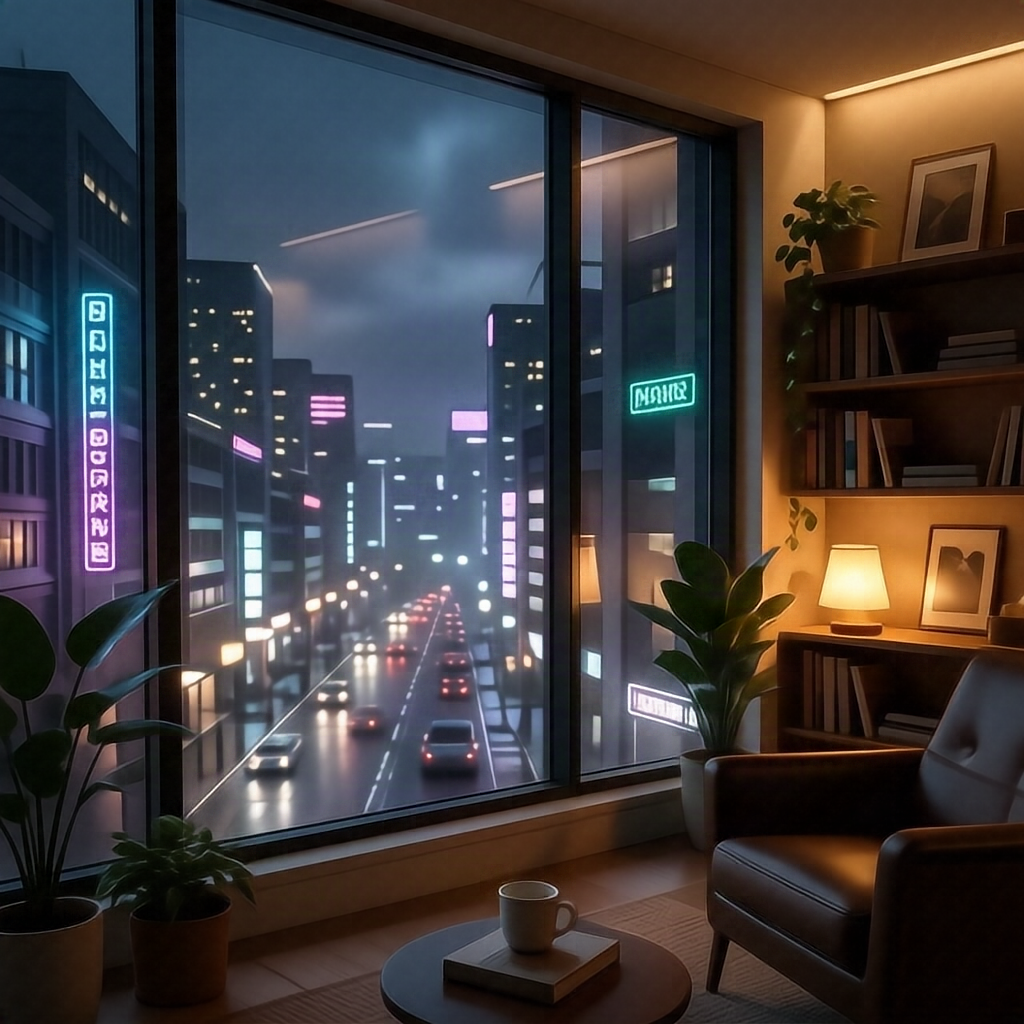 Published Highsfield visual reference: Reading room overlooking a neon city at night.
The published image shows a warmly lit reading room beside a cool city view. It is useful for studying the contrast between a stable interior and an atmospheric exterior. A still establishes appearance, while movement needs its own brief. Use that distinction when planning the proposed scene. This is a reference from the public site, not a newly generated result or proof of Seedance 2.5 performance.
Published character-gesture video example from Highsfield. Open the published video example.
The AI powered video editor poster shows a person making a gesture in front of a doorway. Open the clip to study the readability of a gesture and the stability of the subject’s appearance, then judge the moving result rather than inferring it from the poster. Its use here is as a visual reference; this article does not attribute the clip to Seedance 2.5. Compare the opening and ending before borrowing a camera idea. The proposed project remains a separate, hypothetical exercise.
Check the Clip Against the Actual Assignment
For this particular concept, review spatial continuity and add verified class information later. Reject the draft if the room changes dimensions or equipment appears. That is a visible requirement rather than a general preference for a polished look. If the mismatch appears in only part of the clip, identify that moment before changing the brief. An acceptable opening frame does not excuse a subject or environment that becomes inaccurate during the intended action.
A reviewer should be able to explain a rejection in visible terms. ‘The scene feels off’ is less useful than identifying a change in the mat placement and clear floor space or a break in the intended action. Record the moment when the clip stops matching the brief. The next attempt can then target a specific instruction, while the parts that already work stay intact. Keep the rejected draft as a reference rather than relying on recollection.
Use the normal playback speed as well as paused frames. An isolated still can reveal a shape problem, while a full playback reveals whether the movement communicates the intended action. The moving sequence and individual frames answer different questions. For this exercise, inspect the moment when the room changes dimensions or equipment appears becomes visible. That observation should determine whether the next step is a prompt revision, a simpler scene or a decision to use another kind of production material.
Take the Highsfield Draft Into the Final Edit
Do not build a schedule around an unverified processing-time claim. Prepare the brief and permitted references first, then inspect the current Highsfield model options and estimate before requesting a job. Allow time to inspect the result before considering the task finished. A completed request still needs a usable composition and accurate subject details. The promise to the audience comes from the finished, reviewed asset, not from the speed of the initial attempt.
The edit should serve the action the brief promised. Trim away an unnecessary lead-in, leave enough time for the mat placement and clear floor space to register and add the verified caption separately. End the clip when its intended visual point has been made. For this project, save the chosen draft with its review notes and make the final edit from that approved version. Save the selected result with the approved copy so the person publishing it does not have to guess which version or message the reviewer accepted.

A useful next step is to write the scene in one plain paragraph and decide what would make it unacceptable. For this project, that includes the moment when the room changes dimensions or equipment appears. Highsfield and its Seedance 2.5 workflow can support the exploration, but the creator still needs to supply a clear purpose and judge the result. Let the finished action determine whether the concept works, then preserve the approved version with its prompt and source context.


댓글목록
등록된 댓글이 없습니다.
