
Highsfield for Coastal Sunrise Concepts: Reviewing and Refining a Vide…
페이지 정보
작성자 Jamison 작성일26-11-10 13:54 조회1회 댓글0건관련링크
본문
The most useful video concept often begins with an ordinary production problem. For independent travel and lifestyle creators, this example explores coastal sunrise concepts with a simple purpose: to explore a quiet opening for a fictional coastal story. Highsfield connects that planning question with its Seedance 2.5 guidance, generator and published visual references. Start with the scene a viewer needs to understand, then work backward to subject, movement and framing. This makes the clip easier to judge than a prompt assembled from fashionable cinematic adjectives.

Highsfield’s public pages connect scene prompts, supported image inputs, model settings and review of completed results. Seedance 2.5 is the workflow discussed here, but current availability and accepted inputs should be checked in the generator. The public examples are references with their own context and http:// model attribution. A gallery image is not a specification sheet; use it to study a creative decision rather than assume every visible technique is available in every model.
Make Review More Specific Than Personal Taste
Consider a fictional assignment for independent travel and lifestyle creators. Its purpose is to explore a quiet opening for a fictional coastal story. The setting is a rocky shoreline at sunrise, and the required visual detail is the rock silhouette and a level horizon. Start by choosing a single action the viewer can follow. The value of a coastal concept often lies in restraint. Let the water provide the motion, and avoid adding dramatic camera travel that competes with the quiet scene the opening is meant to establish.
Separate three questions when testing a draft: does the action happen, does the required detail stay stable and does the clip serve its intended destination? For coastal sunrise concepts, each question has a visible answer. A structured review keeps feedback connected to the assignment. If the action works but the subject changes, the next revision should preserve motion and address fidelity instead of replacing the entire scene with another unrelated idea.
A Seedance 2.5 Scene Brief to Evaluate
A proposed scene prompt could read: "Setting: a rocky shoreline at sunrise. Action: Small waves move toward a stationary rock. Camera: a wide locked view. Preserve the rock silhouette and a level horizon. Keep the background stable and end with the subject still recognizable." This proposed prompt illustrates the assignment; it does not document a completed job. Select only input and output options the current model actually supports.
Give the camera an intelligible relationship to the subject. With a wide locked view, the viewer should be able to follow the detail that matters: the rock silhouette and a level horizon. Avoid requesting a zoom, orbit and tracking move in the same small scene unless there is a clear reason for each. One coherent viewpoint makes the result easier to assess. You can introduce a second angle later, after the first shot has established what the scene is about.
A revision note should identify an observable change in the prompt and an observable change in the result. ‘More cinematic’ is too broad to explain why a draft improved. Use visible language for both the instruction and the outcome. For coastal sunrise concepts, a useful note might explain that a simpler camera direction made the rock silhouette and a level horizon easier to inspect. That information can guide the next project without pretending the outcome is guaranteed.
Use Public References With Their Context Intact
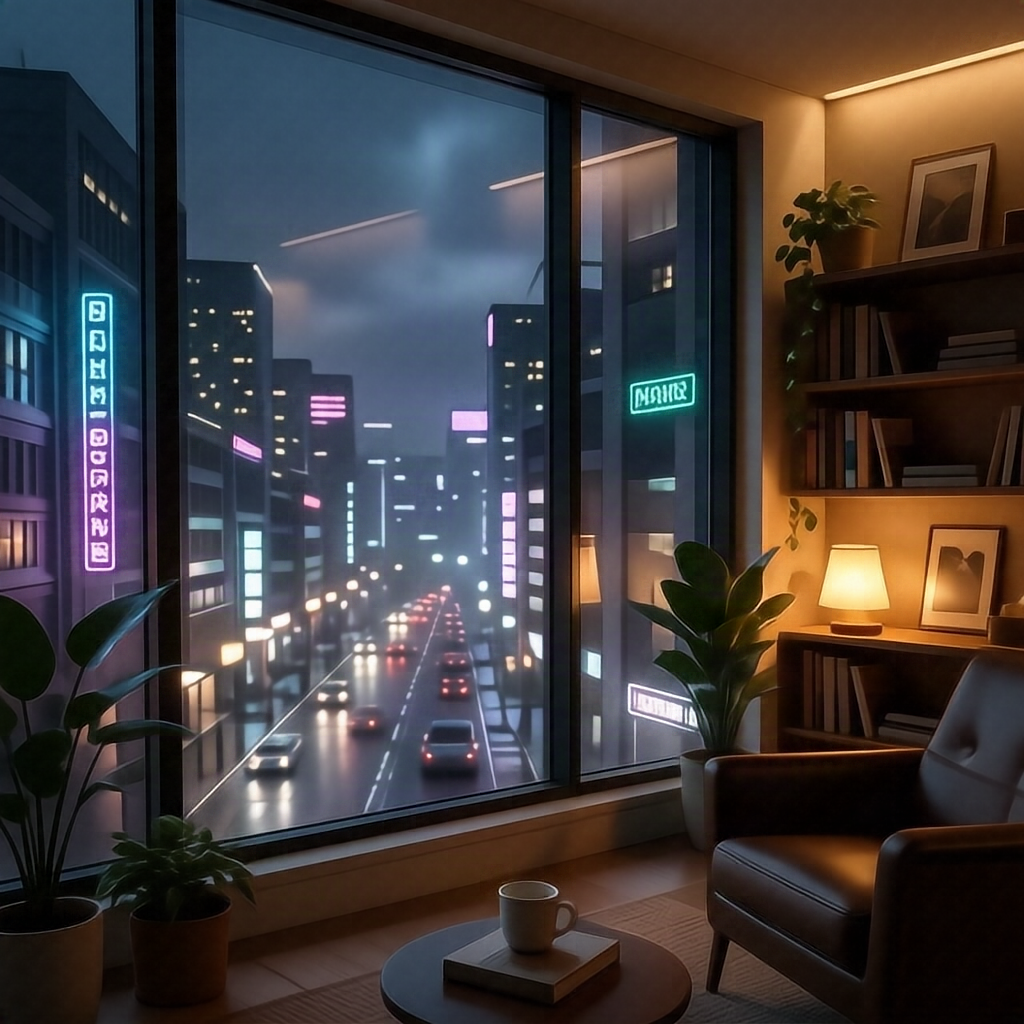 Published Highsfield visual reference: Reading room overlooking a neon city at night.
The published image shows a warmly lit reading room beside a cool city view. It is useful for studying the contrast between a stable interior and an atmospheric exterior. The reference supplies a composition, not an automatic motion instruction. Use that distinction when planning the proposed scene. This is a reference from the public site, not a newly generated result or proof of Seedance 2.5 performance.
Published city-street video example from Highsfield. Open the published video example.
The video poster shows a person seen from behind on a city street. Open the clip to study subject placement, travel direction and the role of background perspective, then judge the moving result rather than inferring it from the poster. Its use here is as a visual reference; this article does not attribute the clip to Seedance 2.5. Compare the opening and ending before borrowing a camera idea. The proposed project remains a separate, hypothetical exercise.
Review the Action and Required Details
For this particular concept, watch the direction of the water and the horizon line. Reject the draft if the horizon tilts or the rock changes shape. This gives the reviewer a concrete standard beyond whether the clip looks impressive. If the mismatch appears in only part of the clip, identify that moment before changing the brief. An acceptable opening frame does not excuse a subject or environment that becomes inaccurate during the intended action.
Separate a creative preference from a production requirement. You might prefer warmer light, while the actual requirement is that the rock silhouette and a level horizon remains accurate. Review the requirement first, then discuss taste. This order keeps useful drafts from being rejected for vague reasons. A clip that fails its main purpose needs a substantive correction; a clip that meets the purpose may need only an editorial adjustment after generation.
Use the normal playback speed as well as paused frames. An isolated still can reveal a shape problem, while a full playback reveals whether the movement communicates the intended action. The moving sequence and individual frames answer different questions. For this exercise, inspect the moment when the horizon tilts or the rock changes shape becomes visible. That observation should determine whether the next step is a prompt revision, a simpler scene or a decision to use another kind of production material.
Complete the Highsfield Workflow Carefully
Do not build a schedule around an unverified processing-time claim. Prepare the brief and permitted references first, then inspect the current Highsfield model options and estimate before requesting a job. Allow time to inspect the result before considering the task finished. A completed request still needs a usable composition and accurate subject details. The promise to the audience comes from the finished, reviewed asset, not from the speed of the initial attempt.
Download the selected result through the completed-job workflow available in Highsfield, then check the file in the editor you intend to use. Preserve its original prompt and the reference context. The saved file still needs a final production check. In this fictional assignment, save the chosen draft with its review notes and make the final edit from that approved version. Verify that captions, crop and playback support the original purpose before the clip is placed beside promotional wording or shared as part of a larger story.
A short video earns its place by making a useful idea visible. In this hypothetical coastal sunrise project, that means preserving the rock silhouette and a level horizon while the scene unfolds as intended. Highsfield’s Seedance 2.5 resources are a place to start planning that work, with live model options checked in the generator. A coherent result is a better goal than a complicated prompt. Keep the useful draft, document the decisions and bring exact wording into the final edit.



댓글목록
등록된 댓글이 없습니다.
